Your capacity doesn't have to decline.
It can apex.
Training for adults who invest in how they'll age (bloodwork, scans, check-ups) but are missing the piece that most directly moves those numbers: precise, longevity-focused training. Strength, cardiorespiratory capacity, and bone density, trained deliberately, tracked honestly.
Two trajectories, same starting point
CAPACITY vs. AGE, ILLUSTRATIVEYour coach, by the numbers. Olga Moroz
Four pillars, trained on purpose, not by accident.
Most training chases how you look in twelve weeks. Longevity training treats your body like a long-term portfolio, built to perform not just now, but in the decades ahead. What makes you leaner by summer is rarely what also keeps you strong and independent at eighty. Because the one resource you can't earn back, borrow, or buy more of is time: good, capable years. That's what this training is really an investment in.
Strength & Muscle
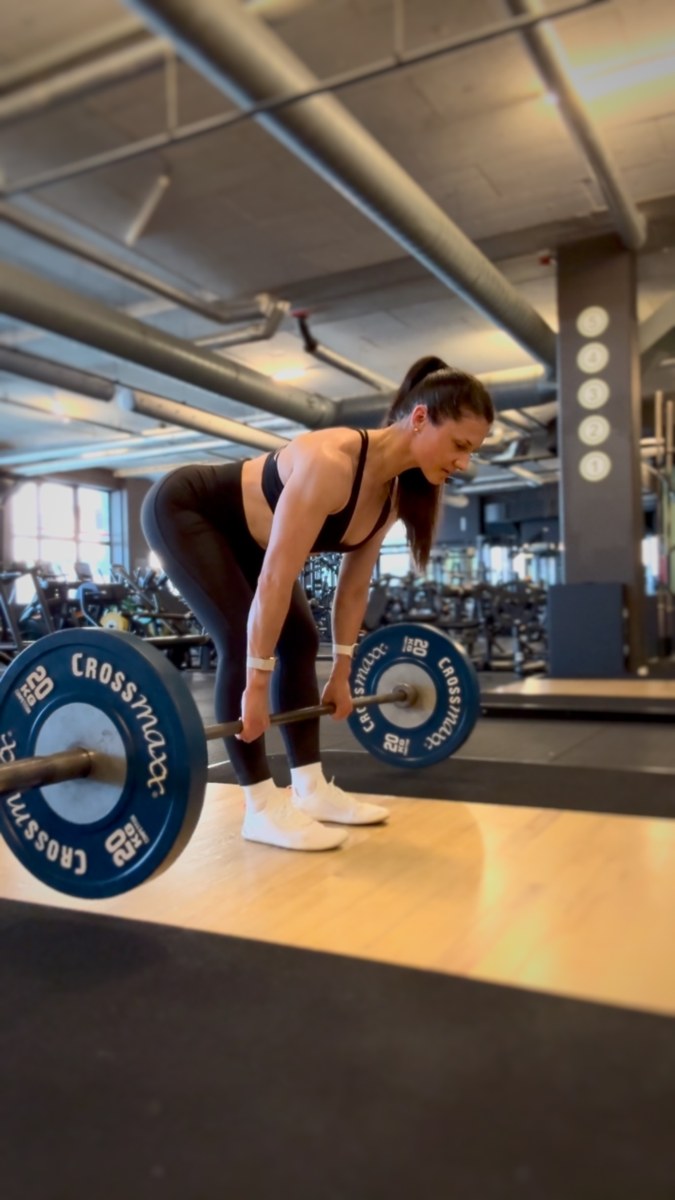
Muscle is the reservoir you draw on as you age, supporting metabolic health, strength, balance, even cardiovascular capacity. It starts slipping away from your thirties, sooner than most people think, unless you fight for it. I built mine through years of powerlifting and bodybuilding, and worked with five-time IFBB World Champion Liubov Popova to hold onto every possible gram of it through an extreme competition cut, stripping away fat to expose the muscle beneath, without losing the muscle itself. Which is exactly the problem longevity training faces: how to keep muscle when the body wants to let it go. We train heavy enough to matter for your strength and muscle, controlled enough to stay safe. This is also the work that builds grip strength, one of the most studied predictors of how independent you'll be in the later decades.
Cardiorespiratory Capacity (VO2max)
VO2max is among the strongest predictors of all-cause mortality we have, a real signal of how well you'll live your last decades, and, unlike most markers your clinic tracks, it responds directly to training. The people with the strongest cardiovascular engines don't just live longer; they stay capable longer, tend to carry higher heart-rate variability, or HRV (a marker of how well the nervous system recovers), and feel it day to day as energy and stamina. That last part is the vitality most people are actually chasing.
Raising it takes a precise two-part approach, not just "more cardio." Most people drift through the middle zones, breathing hard enough that it feels like good work, when it's actually the least productive place to be. I set each session's zones from your live heart-rate data, because the right zone-2 pace shifts day to day, and with only a few training hours a week we can't afford to waste them in the wrong one. Then we build toward true high-intensity intervals, including the Norwegian 4×4, with a progression that even deconditioned clients can execute.
Bone Density
Bone thins quietly as we age, turning, in effect, to something like chalk, and most people only find out when a fall becomes a fracture. In an older adult a broken hip is rarely just a broken hip: within a year, roughly one in four doesn't survive it, and fewer than half of those who do ever fully regain their independence. The good news is that bone is living tissue, and the right training keeps it dense, and even builds it back. But it won't respond to gentle movement; it responds to load and impact. Heavy lifting stresses the spine and long bones in exactly the way that signals them to stay strong, and jumping delivers the sharp, high-force impact that even running doesn't, which is why runners can still have brittle bones. It's what Dr. Vonda Wright, an orthopedic surgeon and leading authority on musculoskeletal aging, bluntly calls bashing your bones. We build toward it carefully: safe technique first, then load and impact added over time.
Mobility & Stability
Bone density decides whether a fall breaks you, but balance, agility and quick reactions decide whether you fall in the first place. Two things fade with age here: the explosive power to catch a stumble, built by the heavy and jumping work above, and the balance, coordination and range of motion that keep you steady in the first place. This is where we train the second: single-leg and reactive balance work, controlled quickness, and true mobility: the ability to produce strength and control through a joint's full range, not just passive flexibility. One simple test captures much of it: whether you can rise from the floor unaided, which researchers link closely to how well you age. It's the area I'm deepening most in 2026, with advanced mobility coursework underway.
2026 focusA measured practice.
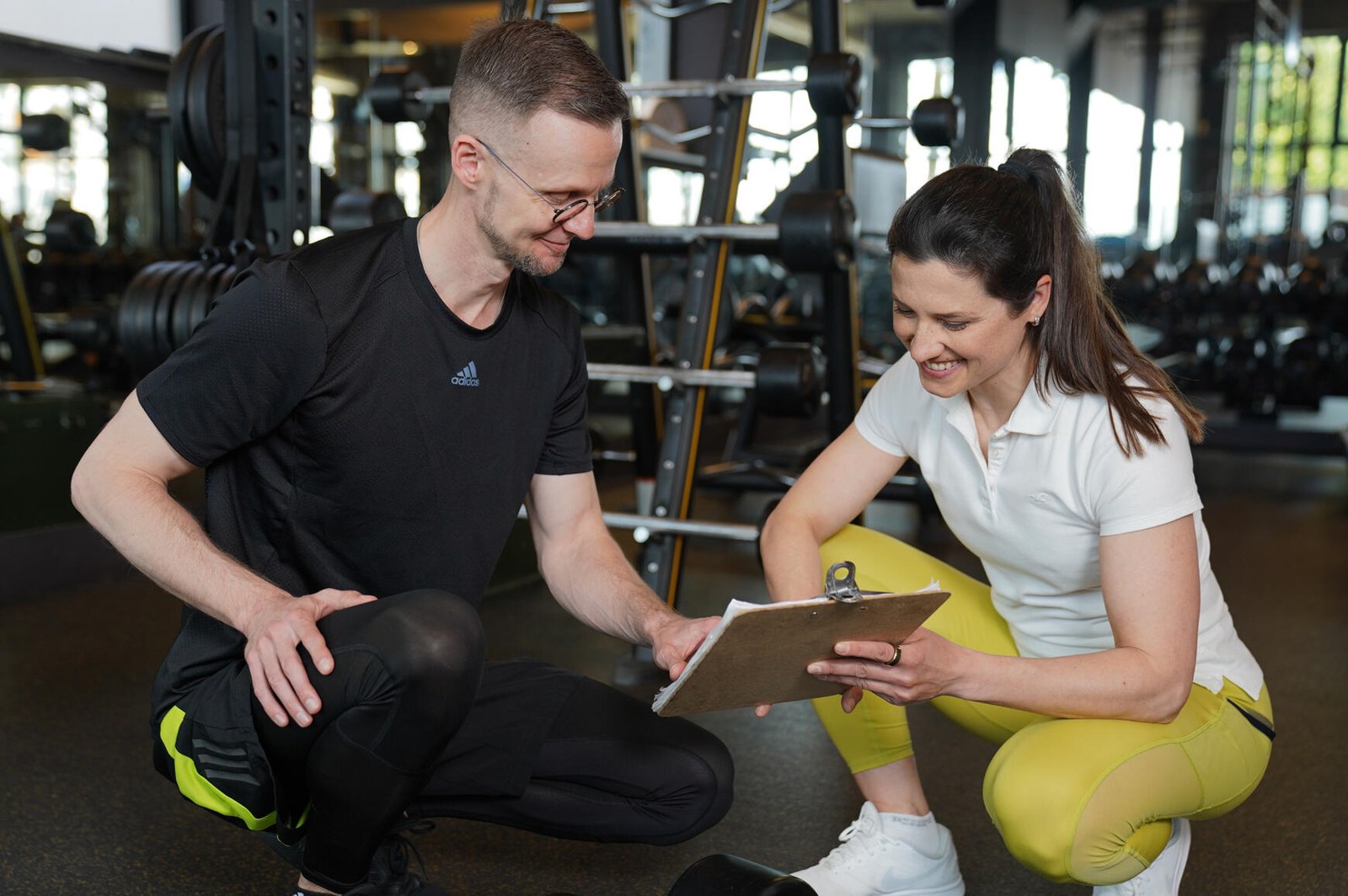
Every session, for every client, the best set of each exercise goes into a log. It means we can see your strength actually climbing over months, and when we cycle an exercise out and bring it back, the log tells us exactly where to restart, so we're never guessing. Body composition is tracked the same way. If you wear a recovery tracker (a ring or wristband that follows your resting heart rate, HRV and sleep), those trends can shape how hard we push and when we back off. And a chest strap during sessions dials in your heart rate, so your cardio time is spent in the zone that actually moves the needle. Data is a tool we leverage for better training, and better results.
Training is what you do for four hours a week. The other 164 matter too.
Nutrition
We're built from what we eat, and it's genuinely hard to live long and well if the raw materials are poor or missing. But it's the fundamentals, done consistently, that move the needle, not the next miracle powder. People argue about seed oils while skipping protein, drinking too much, and living on processed food. So we focus on what matters: enough protein to build or hold muscle, good fats, fibre, real carbs, and water, with room for something delicious now and then. Practical and livable, not a rigid diet. Anything clinical is a conversation for a dietitian or your doctor.
Sleep
You don't get stronger in the gym. You get stronger when you sleep after the workout. Training actually damages muscle and challenges your nervous system; the rebuilding, the getting-stronger, happens during deep sleep. That's when the body absorbs the work and creates positive adaptations. Skip it and you're doing the damage without collecting the reward. Poor sleep inevitably chisels away at your longevity, immune system, mental health, and cognitive abilities. So we look at your rhythm, your light exposure, your evening stimulation, and build habits that protect it.
Supplements
Most of us are short on two things: magnesium and vitamin D. Modern food no longer delivers the magnesium our bodies evolved to expect, and in a country as grey as the Netherlands, skin covered and sun scarce for much of the year, most people simply don't make enough vitamin D. Both need to be at healthy levels for your body to actually absorb the work you put in through training and food. Good supplements, backed by real research, are an easy bonus worth taking. I'll tell you what I take and why: magnesium, vitamin D3, omega-3, creatine, and go deeper if you want. I don't sell supplements and I have no affiliate links. Anything specific to your bloodwork is a conversation for your doctor.
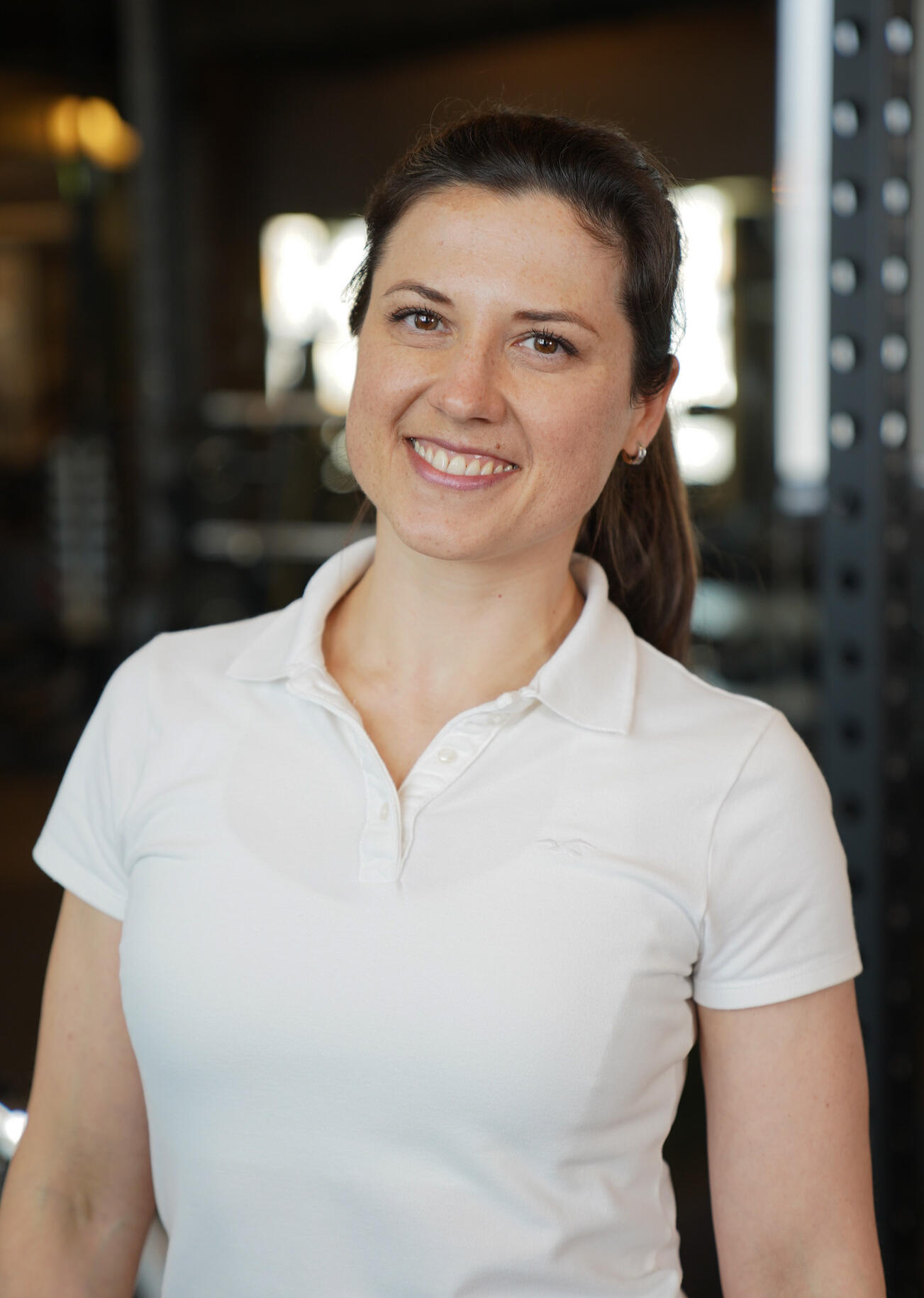
I train the way I coach.
Nutrition hooked me at twelve, when my mother started reading about longevity and health, and I was instantly sold. I was the kid who brought her own greens to the summer-camp canteen, the one childhood friends still quote back to me about eating more fibre. I wanted to be a doctor. My path took a different route first: born in Ukraine, raised in Toronto, a first career as a CPA at PwC and then smaller firms, good at the work and quietly certain it wasn't mine. But this turned out to be the truer version of what I was after. Modern medicine mostly treats what's already gone wrong. I get to work on the other side: prevention. I love helping people build health before there's anything to fix. It feels like a full circle, and better than the one I first planned.
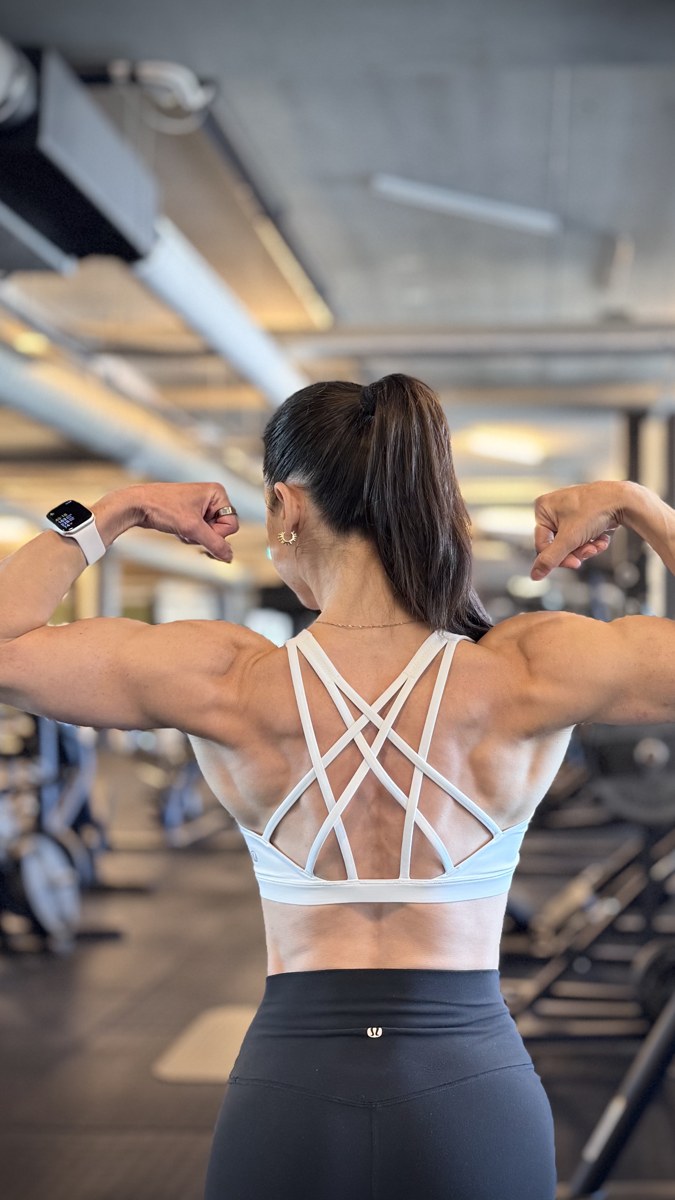
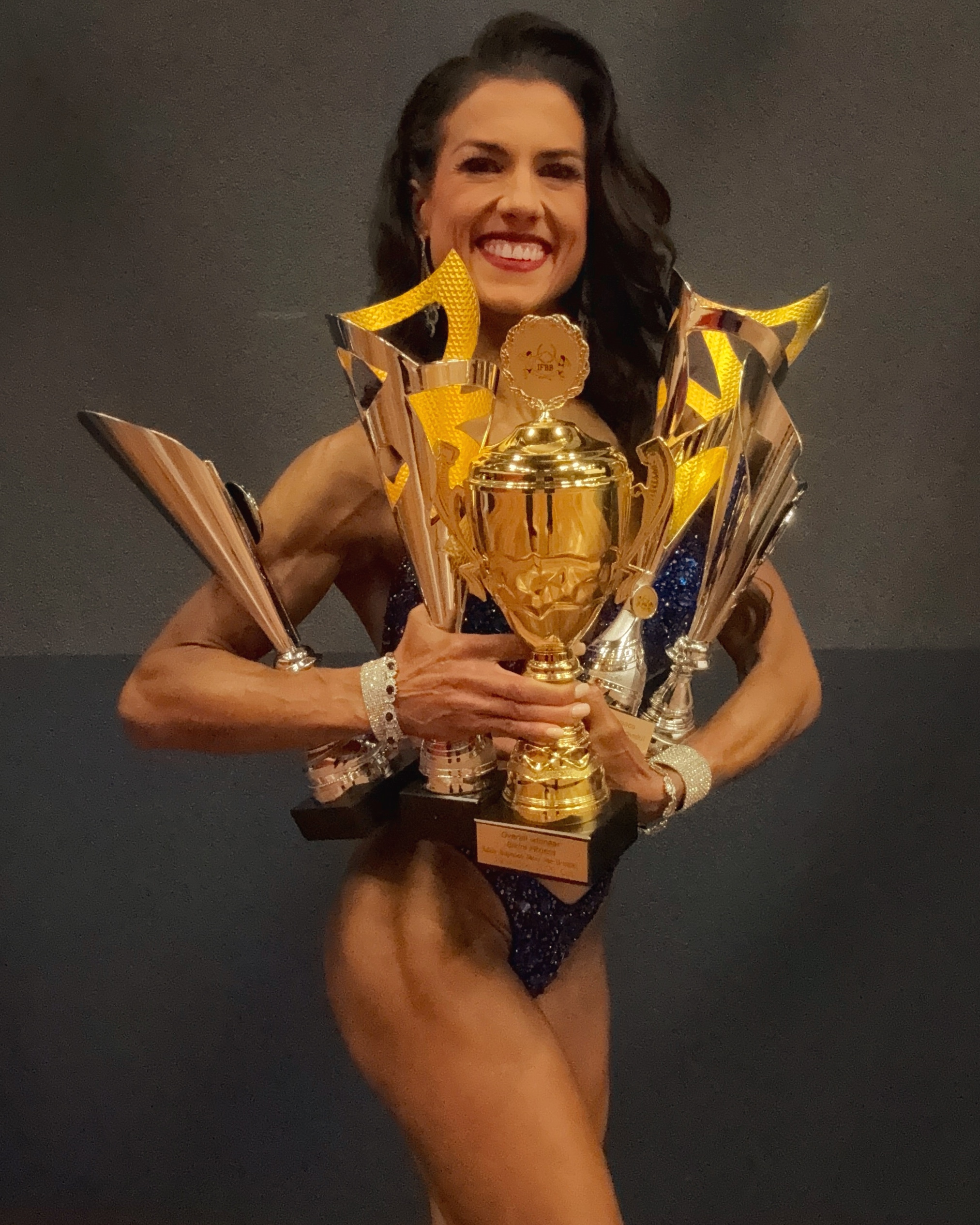
Exercise is what pulled me through a hard stretch after we moved to Amsterdam in 2016: a new country, a lost community, a career that no longer fit, and a young child at home. Once I felt what training did for me, I wanted to give it to other people. So I retrained. I started building muscle in my mid-thirties, self-taught, and in 2024, at 41, stepped on my first bodybuilding stage, in a sport that skews decades younger. I built the muscle myself, but I didn't do the rest alone: five-time IFBB World Champion Liubov Popova coached my competition cut and posing, and I leaned on others for the craft of the stage. In 2025 I took multiple first-place wins and represented the Netherlands at the IFBB World Championships, stepping on the world stage two days after my 43rd birthday.
Along the way I was told I'd do better if I trimmed my muscle down to fit a smaller category, or used drugs to build up into a bigger one. I did neither. I've built close to the natural limit of muscle a body my size can carry, drug-free, and I chose to keep every gram of it, because competing is a hobby, but aging is not. Every gram I hold now is muscle I'll be grateful for at 85, standing up from a chair without reaching for a rail. That's not a metaphor to me. It's the whole point, because the one thing none of us can earn back later is good, capable years.
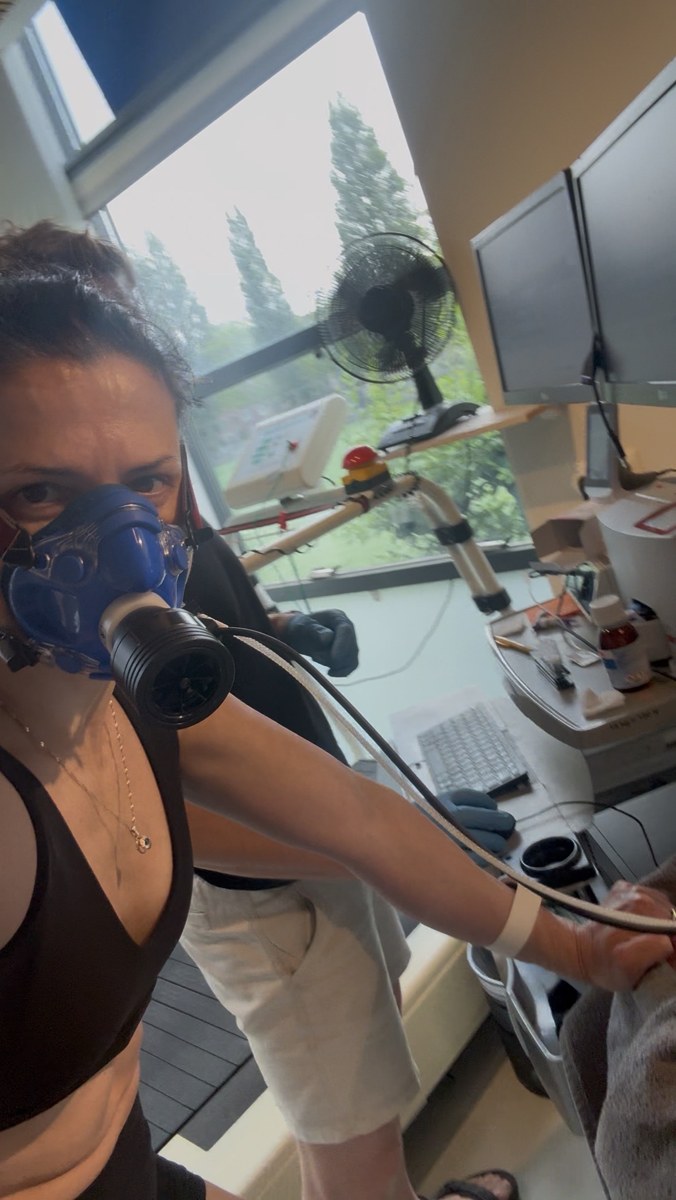
I test everything on myself before a client sees it. My VO2max, 48.2, lab-tested this year, sits in the superior range for my age, and I train it deliberately with the same zone-2 and Norwegian 4×4 work I coach. I wear an Oura ring, a Whoop, and a chest strap, to see what's actually working and make better decisions from real data.
My approach is shaped by current longevity research: Stacy Sims and Vonda Wright on training the aging female body, alongside Peter Attia, Rhonda Patrick, and Matthew Walker, and translated into a program you actually do three times a week, not just read and watch about.
- NASM Certified Personal Trainer
- Functional Aging Specialist (FAI)
- ACE Certified Group Fitness Instructor
- Certified Weight Management Specialist
- Ongoing coursework in conditioning & VO2max programming (Joel Jamieson)
Three ways to work together.
Every client starts with an assessment. No one is placed into a plan without a baseline first.
Longevity Assessment
- Movement & mobility screen
- Strength baseline across the six standards
- Review of any existing bloodwork, DEXA, or VO2max data you already have
- Goal-setting session & program recommendation
Training Block
- Ten 1:1 sessions, prepaid
- Structured programming across all four pillars
- Sleep, recovery & foundational supplement guidance
- Progress check-in & plan update each block
- Optional wearable data review
Performance Concierge
- Ten 1:1 sessions, prepaid
- Deeper sleep, HRV & recovery-load coordination
- Closer work with any clinic or lab data you bring in
- Priority scheduling & WhatsApp access between sessions
All prices include VAT. Prepaid blocks are valid for four months from purchase.
Before you book.
How is this different from regular personal training?
Regular personal training usually optimizes for how you look in the next twelve weeks. Apex Longevity is built around four specific, evidence-informed pillars (strength, VO2max, bone density, and mobility) chosen because they're what keep you capable and independent in the decades ahead. Your progress is tracked against each one, not just the scale or the mirror, so you're better not only now, but for the long run.
Do I need to already track my health data?
No. It's genuinely optional, and you don't need any of it to start. That said, many clients find that once they see their resting heart rate or HRV shift over the months, it becomes surprisingly motivating, proof the training is working beneath the surface. If you're curious, we can fold it in. If not, the sessions speak for themselves.
I've never lifted before, is this still for me?
Yes. We meet you exactly where you are and build from there, and not just overall, but movement by movement. Maybe your hip won't tolerate a deep squat yet but you bench strongly; we scale each pattern to its own level, so nothing is forced and nothing is held back. Everyone starts with an assessment, and the strength targets we work toward are long-term goals, never a day-one requirement.
What if I have an injury or a painful joint?
We train around it, we don't stop. A frozen shoulder (common in menopause), a cranky knee, a bad back: one area being off-limits is never a reason to pause everything. If a shoulder needs rest, we build the lower body and core; if a foot is healing, we sit and train everything above it. The worst thing you can do is stop altogether and lose ground everywhere. Working what you safely can keeps your strength, your habit, and your momentum intact while the rest recovers.
How often will we train?
Most clients train with me two to three times a week, enough for steady, consistent progress without it taking over your life. The research points the same way: a couple of solid strength sessions a week, plus regular cardio, is the pattern most associated with a long, capable life. The strength work is what we do together. The cardio is largely yours to do between sessions, but not just any cardio: it has to hit the right zones to actually move your VO2max, which is where most people go wrong. I'll show you exactly what to do, so none of that time is wasted.
What if something hurts when I train?
Pain is individual, so we treat it that way. Some discomfort is a normal part of getting stronger and can be worked with carefully; some is a signal to change course. Part of my job is knowing the difference for you specifically, and adjusting as we go rather than pushing blindly. I also work closely with physiotherapists, and I'll happily coordinate with yours, or refer you to one, so your training and your rehab pull in the same direction. Their input often makes me a better coach for your body: better exercise choices, better technique, and work you can carry over at home.
Where do sessions take place?
In person, in Amsterdam. Exact location is confirmed when you book your assessment.
Start with an honest baseline.
One assessment. No commitment beyond it. Just a clear picture of where you stand across strength, cardiorespiratory capacity, and mobility, and what it would take to move the needle.
Book Your Free Introductory Call